
C1 Tamoachan: One Adventure, Two Ways to Judge Success
Editorial date: · TSR Archive
The original brief offers competition and ordinary adventure play. Identify the illustration booklet and decide how the scoring changes preparation.
The original description of The Hidden Shrine of Tamoachan offers two uses for the same adventure: a scored competition or a separate, non-scored expedition. Choose between them before preparing the party. Removing a score sheet does not by itself decide which character assumptions, information restrictions or event procedures you want to retain.
Origins '79 is the starting context
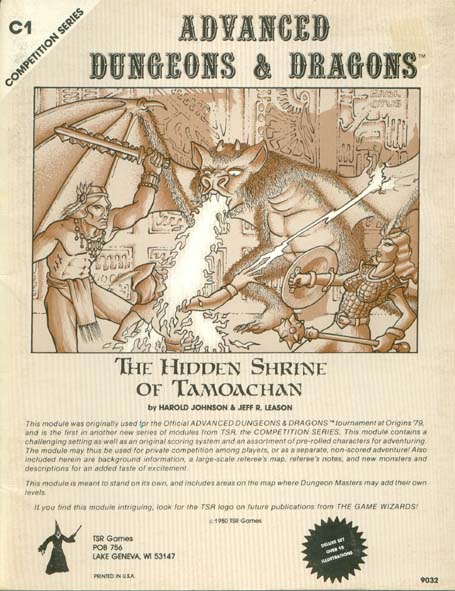
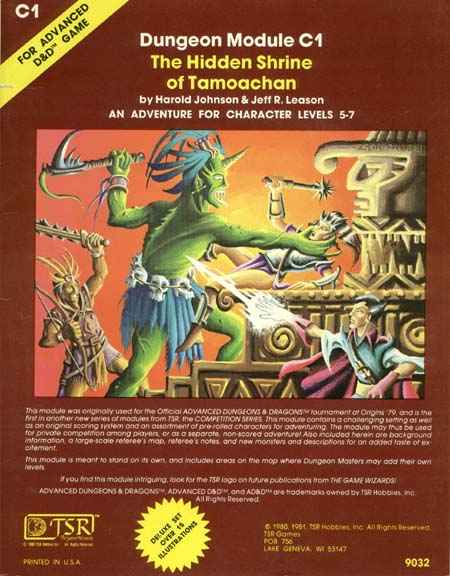
The archive's earlier C1 record reproduces the publisher's statement that the adventure was used for the official AD&D tournament at Origins '79. The licensed digital description preserves that statement, along with the options for scored and ordinary play. Its modern software release is a separate event from the original tournament. A competition needs a consistent basis for comparing outcomes. If that is your purpose, read the supplied scoring system alongside the pre-rolled characters and referee notes. Record which procedures you are actually using before the first session. The historical tournament connection does not supply permission to invent an official time limit or scoring rule that you have not checked in the adventure.
For a home campaign, start instead with the party you have. Compare its resources with the supplied characters and decide which differences require preparation. A campaign party may bring established relationships or equipment that a tournament group did not share. Write those decisions down without presenting them as rules printed in C1.
The illustration book is a separate recorded piece
| Recorded component | What to check |
|---|---|
| 32-page adventure book | Referee notes, scoring material and the encounter references you will use. |
| 8-page illustration book | Presence of the separate booklet and its correspondence with the adventure's references. |
| Maps described in the publisher's brief | Access to the referee map without exposing keyed information to players. |
Both the 1982 fourth-printing record and the 1980 second-printing record list the 32-page book and 8-page illustration book. A listing that merely says "C1 booklet" leaves a useful question unanswered. Ask which pieces are actually present, then request enough photographs to identify them. The cover alone cannot establish that the illustration book accompanies a used copy.
Give pictures a deliberate place in the session
Make a small reference sheet connecting each illustration you plan to use with its point of introduction. Keep that sheet on the referee side. The player should receive the image that supports the current observation, not an unexamined spread containing later material.
If you are running a competition, apply that presentation procedure consistently between groups. If you are running a continuing campaign, note what the party has already seen so an interrupted expedition can resume without a fresh information leak. Neither task requires rewriting the adventure's mystery into a new explanation before the characters investigate.
C1's brief also allows DMs to add levels in designated map areas. That invitation describes room for expansion, not evidence that extra material is needed to make the published adventure usable. Establish the existing endpoint before designing a continuation. For another tournament-to-campaign boundary, see I1's larger setting around its tournament material.
Sources and scope
The archive records establish the described copies and component extents. The original and licensed descriptions establish the tournament origin and two play modes. The reference sheet and display procedure are editorial suggestions. No Origins scoring procedure has been reconstructed here.