
The Isle of Dread: Two Printings, One Wilderness Classroom
Editorial date: · TSR Archive
Two archive records share TSR 9043 but describe different formats. Separate printing identification from the maps and procedures needed for wilderness play.
Two copies of The Isle of Dread can carry the same adventure code and TSR product number while belonging to different printings. The archive records a 1981 second printing and a 1983 fourth printing of X1, both numbered 9043. Their reported formats differ. That is a useful starting point for identifying a copy, but it does not establish a complete list of textual changes.
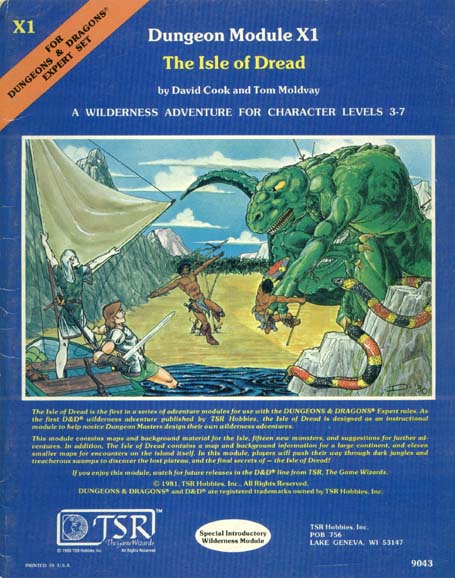
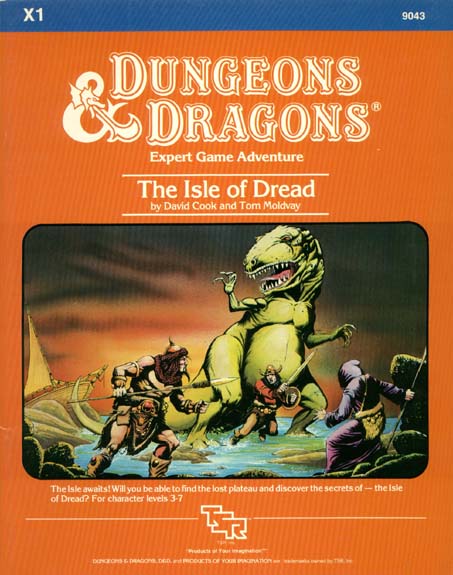
The module also has a job beyond supplying an island full of encounters. Its original description presents it as instruction in wilderness adventure design. A referee choosing a reading copy therefore has two questions to answer: which physical version is this, and can I use its maps and procedures to learn how an expedition works?
The two archive records
| Archive entry | Recorded format | What to verify in a copy |
|---|---|---|
| Second printing, 1981 | 30-page book. TSR 9043, X1. | The actual cover, printed information and surviving map material. |
| Fourth printing, 1983 | 32-page book with a tri-fold cover. The same product number. | The cover arrangement and whether detachable or folded material remains with the booklet. |
These are catalog descriptions of particular versions. A page count in a listing is not a substitute for seeing the item: sellers and bibliographies can count covers and other leaves differently. Ask for the identifying pages and an opened view of the cover before treating a short description as a precise printing diagnosis.
Likewise, do not infer that the later cover means a different rules edition is required for every encounter. A printing distinction and a rules conversion are separate matters. The wider guide to codes and stock numbers explains why a shared number cannot settle the first question.
A wilderness classroom
The licensed description of X1 retains the instructional premise and gives a character range of levels 3 to 7. It describes island maps, new monsters and a larger continent map. Those are distinct scales of information, not simply several illustrations of the same place.
Read outward from an expedition's immediate problem. A local encounter map helps adjudicate what the party can do now. An island map helps compare destinations and routes. The continental material explains how the island sits beyond the familiar mainland. Mixing those scales can make a journey feel arbitrary: an attractive regional map cannot answer a question about crossing a particular obstacle.
For preparation, choose a likely landing place and trace one plausible inward journey. Note where the players can obtain information, where supplies matter and where they can decide to return. This is an editorial reading exercise, not a prescribed route through X1. Its purpose is to expose the decisions the wilderness rules must support.
Keep exploration knowledge separate
A referee's map and a player's account of the island serve different purposes even when both are drawn on hex paper. Maintain a record of what the group actually knows. A discovered landmark, a report from another traveler and an untested guess should not silently become equally reliable marks.
Try preparing one blank expedition record with spaces for departure, destination, provisions, new observations and the reason for turning back. Fill it during play. The important question is whether another journey can begin from that record without reconstructing the previous session from memory.
Leave room for plans that the module does not anticipate. The instructional promise is an invitation to understand and extend a wilderness, not an obligation to replace every unexplored space with a new encounter before anyone lands. Develop the area the players can reach with the resources they actually have.
Check the maps, then choose the format
For a physical copy, make an inventory from the version being offered. For a digital adaptation, check how maps are presented and which software it needs. The modern virtual tabletop release date on a store page dates that adaptation. It does not date the original adventure. If your interest is wilderness procedure, a readable map and accessible encounter references matter more than matching a particular cover on the shelf. If your interest is a specific printing, photographs of those identifying details matter more than a seller's general assurance that the module is complete. Keep the resulting printing note with the copy so the next comparison starts from evidence.
Sources and scope
The two linked archive records supply the printing labels and formats. The licensed product description supplies the instructional purpose and stated level range. This article does not collate every X1 printing. The expedition record is an editorial preparation aid.