Dragon Quest 1100 and DQ1: A Similar Name Hides a Different Product
Editorial date: · TSR Archive
A 1992 introductory box and a 1987 dual-system adventure share a confusing name. Sort their identities and the box inventory before replacing missing pieces.
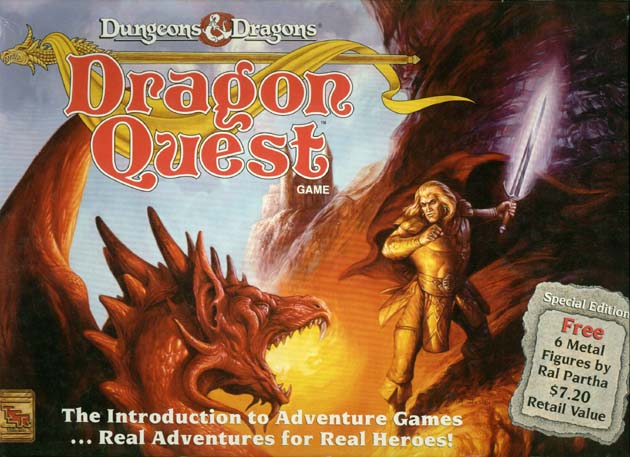
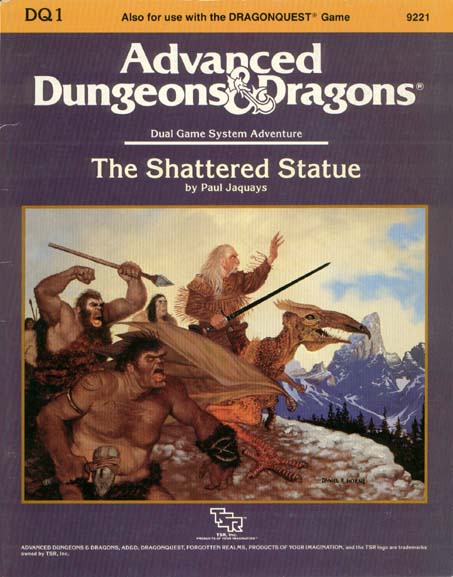
Dragon Quest, TSR 1100, is a 1992 package of books, cards and playing pieces. DQ1 The Shattered Statue is a 1987 adventure that names both AD&D and the DragonQuest game system. Their similar names do not make the older adventure an expansion for the later introductory box. Start with those identities before searching for missing components.
Two records that should stay separate
| Record | Date and format | What its description establishes |
|---|---|---|
| Dragon Quest, TSR 1100 | 1992. An introductory package with books, cards, board and figures. | A game for one player and up to five friends, with a step-by-step progression of adventures. |
| The Shattered Statue, TSR 9221, DQ1 | 1987. 48-page book with tri-fold cover. | A dual-system adventure usable with AD&D and DragonQuest. Suitable for the Forgotten Realms setting. |
The dates are a useful warning against reading DQ1 as a product code for a supplement to the 1992 box. The adventure's own description identifies its rules audiences. Follow that statement rather than expanding the initials into whichever Dragon Quest listing happens to appear first in a search. For a purchase inquiry, ask for the product number and a photograph of the actual title panel. A seller's generic "TSR DragonQuest adventure" can describe a recognizable title while leaving the rules question unresolved.
The 1100 record contains an unresolved inventory difference
The archive's detailed format field lists a 32-page book, a 24-page book and a four-page book, along with a folding board, four sheets of fold-up figures totaling 96, seven dice and 180 cards. It also lists six plastic miniatures and six metal miniatures on a blister card.
The reproduced publisher list below that field names two game books, the rulebook and adventure book, and six plastic heroic figures. It does not repeat the metal-miniature entry. These are two descriptions preserved in one record, not independent proof that every retail copy had the more expansive inventory. This article leaves that discrepancy unresolved.
That limit changes the collecting question. Before declaring metal miniatures missing, find evidence tied to the particular package or printing being offered. A general checklist assembled by joining every list on the page would hide the disagreement that the buyer needs to see.
A playable substitute and an original component are different goals
The cards are not background decoration: the publisher list assigns them magic, monsters, traps and treasure. If a set is incomplete, inspect the cards themselves and record which are present. A total count can identify a shortfall but cannot establish whether a particular adventure can proceed with the surviving material.
For play, note which figure or counter an improvised piece represents. For collecting, retain a separate record of original pieces. A replacement can make a scene understandable without answering whether the purchased package is complete. The two records let you continue playing while keeping the historical inventory honest.
Begin with the chosen rules and adventure books, then check the pieces they call for. The First Quest guide applies a similar reading method to an audio component. It does not make First Quest's own inventory applicable to Dragon Quest.
Sources and scope
Both product identities and the conflicting component lists are visible in the linked archive records. This is an identification and inspection guide, not a certification of every 1100 release. It makes no claim that DQ1 supplies rules for the 1992 box.