
DL1 and Dragonlance Classics: Starting an Adventure, Not Reenacting a Novel
Editorial date: · TSR Archive
DL1 starts at levels 4-6; the later collection spans a broader range. Separate the original module, a campaign compilation and a modern VTT adaptation.
Dragons of Despair introduces a playable situation in Krynn, not a requirement to reproduce a novel's events. The original publisher description offers its Dragonlance modules as separate adventures or as a larger quest. That choice remains useful when deciding between DL1 itself and a later collection of the opening campaign.
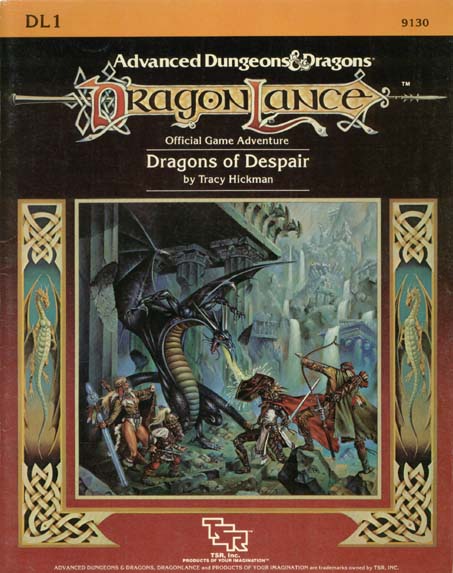
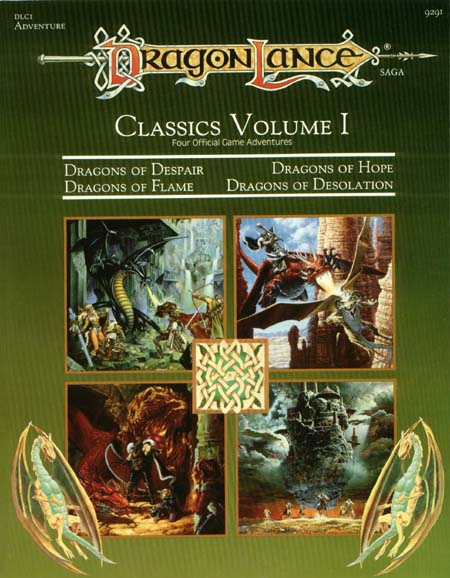
DL1 starts with an immediate problem
The TSR 9130 record identifies Tracy Hickman's 1984 adventure as a 32-page book with tri-fold cover, for characters of levels 4-6. Its opening premise combines a return toward Solace with a search for lost clerical magic and reports of an invading army. The description names Haven and Xak Tsaroth among the places the adventure visits. Those details are enough to frame preparation without turning the opening briefing into a lecture on the entire setting. Establish why the characters have returned, what they have heard and which immediate problem they can investigate. Keep later revelations in the referee material until play provides a reason for them to emerge.
In a 2020 interview, early Dragonlance designer Douglas Niles recalled his initial doubts about tying player characters to a prewritten story. He also described Hickman's proposal for a connected module series and accompanying novels. His recollection identifies a design tension. It does not establish that every table must resolve it in the same way.
The collection starts a wider commitment
| Publication | Recorded package | Advertised scope |
|---|---|---|
| DL1, TSR 9130 | 1984. 32-page book with tri-fold cover. | The opening adventure. Levels 4-6. |
| DLC1, TSR 9291 | 1990. 128-page book with rear-folding flap and two fold-out maps. | The first four modules gathered together. Levels 3-8. |
The collection's larger level range describes its broader advertised journey. It should not be substituted for DL1's range in an identification note. Likewise, two loose maps in a collection are not interchangeable evidence for what accompanied an original single-module copy. Record the package before comparing an incomplete purchase with an inventory found elsewhere.
If you own both versions, select one as the source of your encounter references. Use the other for a specific comparison or borrowed element, with that borrowing marked. The archive description establishes the collection's extent and coverage but does not provide a complete list of mechanical changes.
A modern release date identifies another format
The licensed Fantasy Grounds adaptation preserves the original level range and credits Hickman. It also gives a September 30, 2026 release date and software requirements. Those fields describe that adaptation. They do not move the original adventure's publication from 1984 into the present.
Before using a digital version, open the encounters and maps you intend to run in the required software. Verify what becomes visible to a player when an image is shared. The useful comparison is between the adventure you are preparing and its actual delivery format, not between two release dates taken out of context.
For setting references beyond this opening, the Dragonlance Adventures and Tales of the Lance comparison addresses sourcebooks and boxed material. Those books have another job. Choosing a broader setting reference does not decide the players' next action in DL1.
Sources and scope
Physical formats and campaign ranges come from the archive. Niles supplies attributed design recollections. The licensed store identifies its own modern adaptation. No novel-to-module scene concordance or exhaustive conversion audit is claimed.